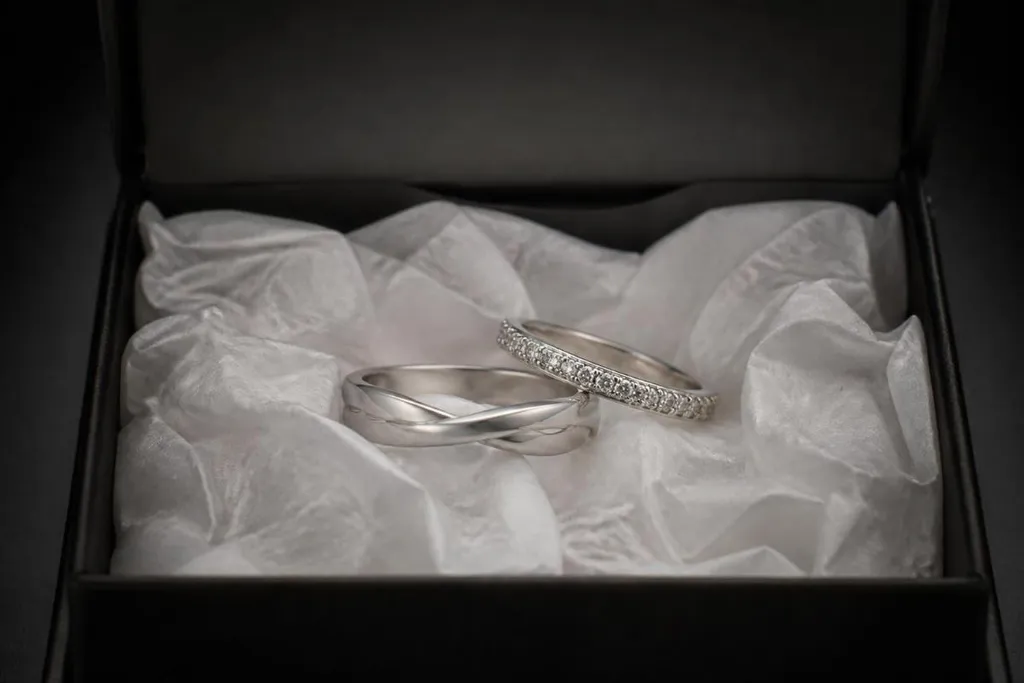
A wedding band can do more than provide a simple line beneath an engagement ring. A twist design introduces movement, while pavé-set stones add fine points of light that change as the hand turns. In 18k white gold, the effect becomes particularly cohesive: the cool-toned metal provides a bright foundation for the pavé detailing without distracting from the flowing structure of the band.
For someone considering a more expressive alternative to a plain wedding ring, the option to order the white gold Ivy wedding band from Lily Arkwright demonstrates how an intertwined profile, pavé detailing and 18k white gold can work together. Rather than relying on a single prominent feature, the design gains character from the interaction between curved lines, contrasting surfaces and continuous sparkle.
Why a Twist Design Creates Visual Movement
A conventional wedding band follows a predictable circular line, which gives it simplicity and symmetry. A twist band changes that rhythm.
Interweaving sections create the impression that the ring is moving around the finger. This can make even a relatively fine band feel more distinctive without requiring excessive width or oversized stones.
The effect becomes particularly interesting when pavé-set sections interact with polished metal. One part of the twist may catch the eye through diamond sparkle, while another is defined by the reflective surface of the white gold. As the viewing angle changes, different areas become more prominent.
This makes a twist band appealing to someone who finds a completely plain wedding ring too restrained but does not necessarily want the uniform appearance of a conventional straight pavé band.
The shape itself provides decoration, meaning the design remains recognisable even when viewed from a distance.
How Pavé Adds Sparkle Without Excessive Weight
Pavé setting uses small stones positioned closely together, allowing the surface of a ring to catch light without requiring large individual diamonds.
On a twist wedding band, this type of setting can emphasise the curved structure. Rather than appearing as one uninterrupted row, the sparkle follows the movement of the design and helps define its contours.
This is an important distinction. A larger-stone eternity band tends to make the gemstones themselves the dominant feature. Fine pavé can feel more integrated with the metalwork, producing texture as well as brilliance.
For someone pairing the band with an engagement ring, that restraint can be useful. A prominent solitaire, halo or trilogy setting already provides substantial visual interest. Smaller pavé detailing introduces additional sparkle without automatically competing with the engagement ring's centre stone.
The balance depends on the complete bridal set rather than viewing each ring independently.
Why 18k White Gold Suits Pavé Detailing
White gold is particularly effective in diamond-set designs because its cool colour creates visual continuity around bright stones.
Small gaps between pavé settings can appear less pronounced than they would in strongly contrasting yellow or rose gold. The result is a smoother field of brightness that allows the twist pattern to remain the principal design feature.
An 18k white gold band also coordinates naturally with engagement rings made in the same metal. Matching the metals can make two separately designed rings appear more cohesive when worn together.
White gold does, however, require appropriate long-term care. Its bright white appearance is commonly achieved with a rhodium-plated finish, which can gradually wear through everyday use. How quickly this occurs varies according to lifestyle and wear patterns.
Periodic professional inspection and replating when necessary can restore the desired finish. This is particularly worthwhile on a detailed pavé band, where clean, bright metal helps the smaller stones look their best.
Pairing and Caring for a Twist Pavé Band
A twist wedding band can work with several engagement-ring styles, but proportion should guide the pairing.
Beside a simple solitaire, the band introduces texture and additional sparkle, creating contrast without requiring a more elaborate engagement ring. Alongside a pavé engagement ring, it can produce a richer, more continuous diamond-set appearance.
The profiles should also sit comfortably together. Because a twist band does not always follow a perfectly straight visual edge, small spaces between the rings may become part of the look.
Regular care is important for pavé settings. Lotions and soap residue can collect around small stones, reducing their brightness, while periodic professional checks can help identify any setting wear.
Removing the band for activities involving heavy impact or abrasion is a sensible precaution, particularly because numerous small settings are involved.
Final Thought
A twist pavé wedding band offers a different kind of impact from either a plain ring or a conventional eternity band. Its appeal comes from movement: curved lines create the structure, pavé stones trace that structure with light, and 18k white gold provides a cool, cohesive backdrop.
For someone who wants a wedding band with visible character but refined proportions, the combination offers an elegant balance of texture and sparkle. It can stand confidently on its own while remaining versatile enough to become part of a thoughtfully coordinated bridal stack.